
German C-Test sample
Studienkolleg der TU Darmstadt في دارمشتات: برنامج تحضيري من فصلين دراسيين، بلغة التدريس: الألمانية، بمسارات: T، G. اطّلع على شروط القبول ومواعيد التقديم…
ابدأ طلبك
قدّم عبر GerAssist واحتفظ بكل خطوة في مكان واحد.
German C-Test sample
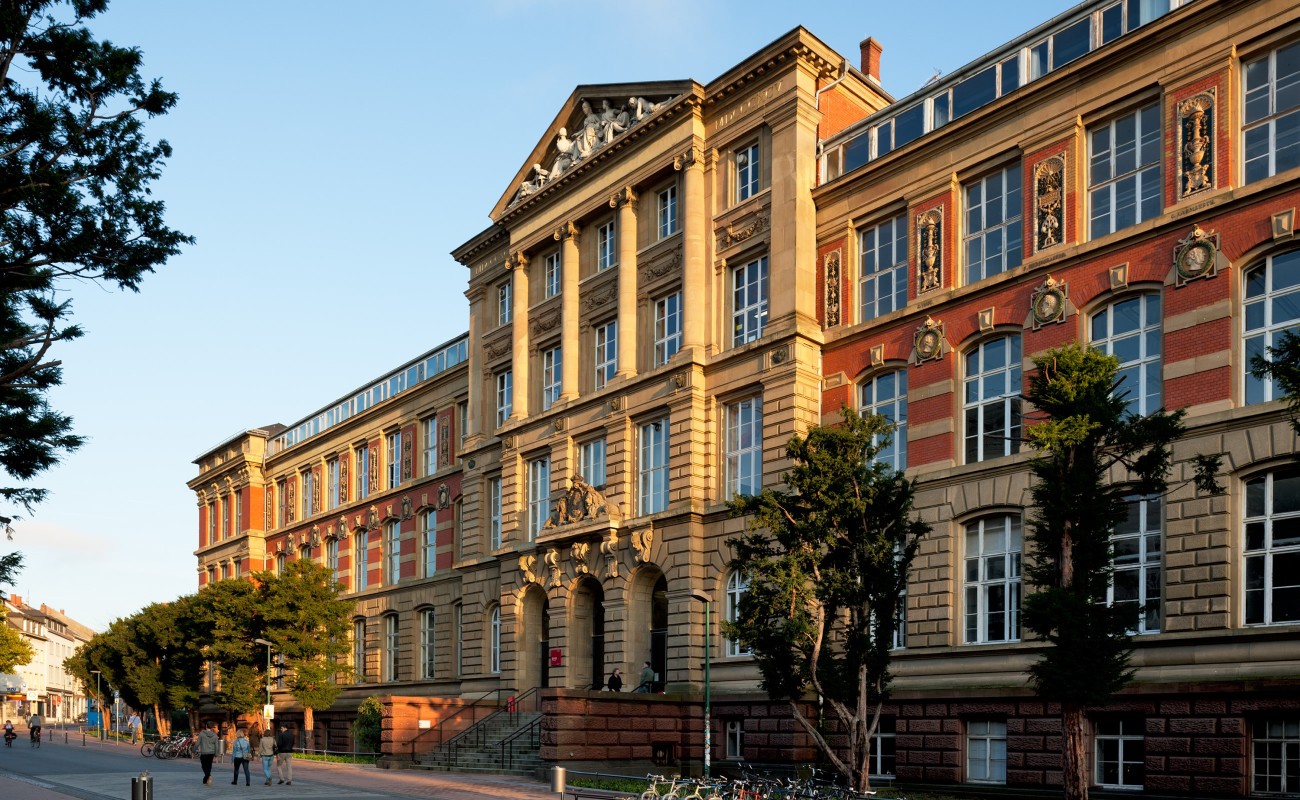
Important goals of attending the Studienkolleg are the acquisition of subject area-related, language, methodological, and social skills and competences relevant for academic studies.
Our Studienkolleg offers a protected setting to prepare for academic studies in Germany and for an introduction to German culture. This is accomplished in small intercultural study groups with intensive guidance.
Our teachers and students deal with each other in a friendly manner characterized by mutual appreciation, respect, and tolerance. In this setting, different cultural backgrounds can be experienced as a source of mutual enrichment.
In addition to conveying sound specialised knowledge and methodological skills, our teachers provide support with settling into the students' new country of choice for their studies—Germany—and an initial orientation in the university environment.
Our students take the opportunity provided to them by making use of the range of courses offered in an increasingly responsible and independent manner, while continuously broadening their subject area-related, language, methodological, and social skills in order to successfully complete their studies in Germany.

Intensive guidance at the Studienkolleg: Classes are taught by experienced teachers who provide intensive guidance and advice to the students. Class size is no more than 20 students, which enables interactive instruction and makes it possible to respond to the individual needs of the students. In addition, they already attend lectures at the TU Darmstadt in order to familiarise themselves with everyday life at university. Numerous info sessions, such as orientation day and academic advisory services, help to find one's way in the students' everyday life in Darmstadt.
Tutorials and Phonetics Classes: Students have the possibility to improve their pronunciation and to thereby be more successful in communicating in German. Students attending the T course are provided with additional practising possibilities and guidance in the subjects of mathematics and physics.
The Buddy Programme of the TU Darmstadt offers support after arrival in Germany, e. g. with finding accommodation and visits to authorities; the buddies (students in higher semesters) establish the first contact between the students from abroad and the students of a faculty at the TU Darmstadt, they facilitate the process of settling into life in Darmstadt and at the TU Darmstadt by joint activities, and they help with further advice during the semester.
Key qualifications: In addition to subject area-related and language classes, key qualifications (soft skills) such as time management, project work and teamwork, and intercultural competence are supplemented and deepened by workshops.
Student Status: Students attending the Studienkolleg are enrolled students and have student status. They are provided with a semester ticket for local public transport and can make use of the university canteen (“Mensa”), the library, extensive sports programmes, and many more offers at the respective college.
Convenient Location: All classrooms of the Studienkolleg are accommodated in a separate building. Its convenient location near the main station makes it easy to travel to the city centre and to the surroundings, e. g. to Frankfurt, Mainz, Mannheim, Heidelberg, and Wiesbaden.
TU Darmstadt: -- excellent research and teaching: The TU Darmstadt is a member of the TU9 association, the network of Germany's leading Institutes of Technology. It stands for excellent research and teaching. In Germany's best-known comparison of colleges and universities, the CHE-Ranking, the TU-Darmstadt has constantly achieved very good positions among the top ranks.
Darmstadt, City of Science and Digitalisation: Darmstadt is the headquarters of numerous internationally important research institutions and companies with which the TU Darmstadt maintains scientific collaborations (e. g. ESA /ESOC – European Space Operations Centre, EUMETSAT – European Organisation for the Exploitation of Meteorological Satellites; GSI Helmholtz Centre for Heavy Ion Research, Fraunhofer LBF – Institute for Structural Durability and System Reliability, Fraunhofer IGD – Institute for Computer Graphics Research, Fraunhofer SIT – Institute for Secure Information Technology; MERCK Pharmaceuticals, Deutsche Telekom).
Explore the objectives, learning approach, attendance requirements and German-course exemption information for the T and G courses at Studienkolleg Darmstadt.
The T course prepares prospective students for degree programmes in the natural sciences and engineering at a university, university of applied sciences or technical college.
Abstract thinking and problem-solving strategies
Language and subject-specific expertise
Scientific working methods and techniques
Collaboration and group-work skills
Natural-science fundamentals are taught through lessons, exercises and guided experiments. Students apply the course material both theoretically and practically, while strengthening their ability to work independently.
Regular attendance is compulsory, and final course examinations or projects must be completed by the stated deadlines. Students who hold DSH-2 or an equivalent certificate may request exemption from German as a Foreign Language (DaF) and the German examination after completing the relevant Feststellungsprüfung.
Equivalent certificates include TestDaF (4 × 4), DSD II/C1, the Goethe Institute’s large or small language diploma, Goethe-Zertifikat C2, certificates covered by bilateral agreements and telc C1 Hochschule.
Find the Studienkolleg course that matches your intended degree programme.
| Degree programme | Degree type | T Course | G Course | M Course | W Course | S Course |
|---|---|---|---|---|---|---|
| Angewandte Geowissenschaften | Bachelor of Science | × | ||||
| Architektur | Bachelor of Science | × | ||||
| Bauingenieurwesen und Geodäsie | Bachelor of Science | × | ||||
| Bautechnik | Bachelor of Education | × | ||||
| Bio-Materials Engineering | Bachelor of Science | × | ||||
| Biologie | Bachelor of Science | × | × | |||
| Biologie | Lehramt an Gymnasien | × | × | |||
| Biomolecular Engineering – Molekulare Biotechnologie | Bachelor of Science | × | × | |||
| Chemie | Bachelor of Science | × | × | |||
| Chemie | Lehramt an Gymnasien | × | × | |||
| Chemietechnik | Bachelor of Education | × | × | |||
| Cognitive Science | Bachelor of Science | × | × | × | ||
| Computational Engineering | Bachelor | × | ||||
| Deutsch | Lehramt an Gymnasien | × | ||||
| Digital Philology | Bachelor of Arts | × | ||||
| Digital Philology | Joint Bachelor of Arts – 1st subject | × | ||||
| Digital Philology | Joint Bachelor of Arts – 2nd subject | × | ||||
| Digital Philology | Joint Bachelor of Arts | × | ||||
| Elektrotechnik und Informationstechnik | Bachelor of Education | × | ||||
| Elektrotechnik und Informationstechnik | Bachelor of Science | × | ||||
| Ergänzungsstudium Lehramt – Biologie | — | × | × | |||
| Ergänzungsstudium Lehramt – Chemie | — | × | × | |||
| Ergänzungsstudium Lehramt – Deutsch | — | × | ||||
| Ergänzungsstudium Lehramt – Geschichte | — | × | ||||
| Ergänzungsstudium Lehramt – Informatik | — | × | ||||
| Ergänzungsstudium Lehramt – Mathematik | — | × | × | |||
| Ergänzungsstudium Lehramt – Philosophie/Ethik | — | × | ||||
| Ergänzungsstudium Lehramt – Physik | — | × | ||||
| Ergänzungsstudium Lehramt – Sport | — | × | × | |||
| Germanistik | Joint Bachelor of Arts – 1st subject | × | ||||
| Germanistik | Joint Bachelor of Arts – 2nd subject | × | ||||
| Geschichte | Joint Bachelor of Arts – 1st subject | × | ||||
| Geschichte | Joint Bachelor of Arts – 2nd subject | × | ||||
| Geschichte mit Schwerpunkt Moderne | Bachelor of Arts | × | ||||
| Informatik | Bachelor of Education | × | ||||
| Informatik | Bachelor of Science | × | ||||
| Informatik | Joint Bachelor Arts – 2. subject | × | ||||
| Informatik | Lehramt an Gymnasien | × | × | |||
| Informationssystemtechnik | Bachelor of Science | × | ||||
| Ingenieurwissenschaften und Mechanik | Bachelor of Science | × | ||||
| Körperpflege | Bachelor of Education | × | × | |||
| Maschinenbau – Sustainable Engineering | Bachelor of Science | × | ||||
| Materialwissenschaft | Bachelor of Science | × | ||||
| Mathematik | Bachelor of Science | × | ||||
| Mathematik | Lehramt an Gymnasien | × | ||||
| Mechatronik | Bachelor of Science | × | ||||
| Medizintechnik | Bachelor of Science | × | ||||
| Metalltechnik | Bachelor of Education | × | ||||
| Pädagogik | Bachelor of Arts | × | × | |||
| Philosophie | Joint Bachelor of Arts – 1st subject | × | ||||
| Philosophie | Joint Bachelor of Arts – 2nd subject | × | ||||
| Philosophie | Joint Bachelor of Arts | × | ||||
| Philosophie/Ethik | Lehramt an Gymnasien | × | ||||
| Physik | Bachelor of Science | × | ||||
| Physik | Lehramt an Gymnasien | × | ||||
| Politik und Wirtschaft | Lehramt an Gymnasien | × | × | |||
| Politikwissenschaft | Bachelor of Arts | × | × | |||
| Politikwissenschaft | Joint Bachelor of Arts – 1st subject | × | ||||
| Politikwissenschaft | Joint Bachelor of Arts – 2nd subject | × | × | |||
| Psychologie | Bachelor of Science | × | × | × | ||
| Soziologie | Bachelor of Arts | × | × | |||
| Soziologie | Joint Bachelor of Arts – 1st subject | × | × | |||
| Soziologie | Joint Bachelor of Arts – 2nd subject | × | ||||
| Sport | Lehramt an Gymnasien | × | × | |||
| Sportwissenschaft | Bachelor of Science | × | × | |||
| Sportwissenschaft | Joint Bachelor of Arts – 1st subject | × | × | |||
| Umweltingenieurwissenschaften | Bachelor of Science | × | ||||
| Wirtschaftsinformatik | Bachelor of Science | × | ||||
| Wirtschaftsingenieurwesen – Bauingenieurwesen | Bachelor of Science | × | ||||
| Wirtschaftsingenieurwesen – Elektro- und Informationstechnik | Bachelor of Science | × | ||||
| Wirtschaftsingenieurwesen – technische Fachrichtung Maschinenbau | Bachelor of Science | × | ||||
| Wirtschaftsingenieurwesen – Materialwissenschaft | Bachelor of Science | × | ||||
| Wirtschaftswissenschaften | Joint Bachelor of Arts – 2. subject | × | × |


The Technische Universität Darmstadt, commonly known as TU Darmstadt, is a public research university in the city of Darmstadt, Germany. It was founded in 1877 and received the right to award doctorates in 1899. In 1882, it was the first university in the world to set up a chair in electrical engineering.
على مستوى العالم
121
ألمانيا
14
على مستوى العالم
284
ألمانيا
27
الفعاليات القادمة