

Loading programme details…
Studienkolleg der Universität Heidelberg in Heidelberg: 2-semester preparatory programme, taught in German, with T, M, W course tracks. Check entry…
Start your application
Apply through GerAssist and keep every step in one place.
Checking access
Loading admission and language requirements.
The written entrance exam is identical for all Schwerpunktkurse (G, M, S, T, W) and tests German only. It consists of Grammar and vocabulary (45 minutes) and Text production (45 minutes). Both parts count 50%.
Checking access
Loading deadline and intake information.
Checking access
Loading application document requirements.
Checking access
Loading certification and translation requirements.
Advertisement
Choose the core course that matches your intended degree programme. The Heidelberg Studienkolleg offers preparation in five subject areas.
The G course prepares students for German studies, humanities, arts and related degree programmes.
I studied at the Studienkolleg in 2020. I would like to thank you for all the knowledge and the skills you taught me. I am now studying General Biology at KIT [= Karlsruhe Institute of Technology], and my knowledge from the Studienkolleg helps with my exams and practical courses.
I studied at the Studienkolleg (M course) in 2022 and 2023. It was only there that I was able to really grasp the medical subjects. Although studying at the Studienkolleg was sometimes demanding for some, I gained very valuable and extensive knowledge there. [...] The atmosphere at the Studienkolleg was always very friendly, and I am still in close contact with my former fellow students. I am currently studying medicine at Freiburg University. I would like to thank you very much for all the experiences that are now of great benefit to me in my studies.
Dear new students at the Heidelberg Studienkolleg, I hope you have arrived safely in Heidelberg and are looking forward to starting your studies. By being admitted into the Heidelberg Studienkolleg, you have taken an important step in your educational journey, and I would like to offer you my warmest congratulations. Studying and living in this city and at this unique centre of learning is not only academically enriching, but also a formative life experience. I can still remember precisely the moment when I received the news that I would be spending a year in Heidelberg. This city, characterised by its picturesque old town and vibrant student culture, offers the ideal setting to begin your studies. Compared to major cities like Berlin or Munich, Heidelberg may seem smaller, but it is precisely this intimate atmosphere that gives it its special charm. It’s not for nothing that people say you can “lose your heart” in Heidelberg. The Studienkolleg offers the best preparation for university that I can imagine. At first, I had my doubts as to whether I personally needed it and feared I would be wasting precious time. But now, having successfully completed the Studienkolleg, I know with absolute certainty that the experience was more than worth it. I was particularly impressed by the teaching methods and the structure of the courses at the Studienkolleg. The teachers are not only highly knowledgeable but also dedicated. The curriculum is structured in such a way that it is easy to make connections between the various subject areas and develop a deep understanding. Above all, however, I appreciate the personal touch: the teaching staff are always approachable and support you throughout the year with advice and practical help. I would also like to mention Mrs Gardt, the warm-hearted and helpful head of the Studienkolleg, who is always ready to listen to students’ concerns. As far as the classes are concerned, they’re neither particularly easy nor particularly difficult – it ultimately depends on the individual. But I can assure you of one thing: if you follow the teachers’ instructions and keep at it consistently, you’ll get through it all. It is important not to give up, even when things get difficult. Many of you have come here on your own, to a different country with a different language and culture. This change requires courage and perseverance. But it is precisely through these challenges that we grow. By the end of your first semester, you’ll see just how much you’ve grown, both personally and academically. So don’t hesitate to face up to the challenges, because after hard work always follows the reward. Last but not least, I wish you all the very best for your time at the Studienkolleg. Make the most of this unique opportunity; learn not only for your studies, but also for life. And above all: enjoy this special time, which will provide you with knowledge and unforgettable memories!
Frequently asked questions about eligibility, duration, class schedules and fees at the Heidelberg Studienkolleg.
Prospective students with a non-German indirect university entrance qualification, meaning without direct university access, are required to attend the Studienkolleg before starting their intended degree programme in Germany. If you have a direct university entrance qualification for your intended degree programme, attending the Studienkolleg is neither necessary nor possible on a voluntary basis. You can check whether you are eligible or required to attend using the anabin online service (German only): select “Schulabschlüsse mit Hochschulzugang”, then “Suchen”, your country and your diploma or certificate. If you already have direct university access, Heidelberg’s Foundation Semester Courses may offer targeted preparation. If you do not yet have a recognised German certificate, or your German is not sufficient, the German courses at the Kolleg für deutsche Sprache may be suitable.
Preparation for the Assessment Examination (“Feststellungsprüfung”) at the Studienkolleg Heidelberg usually takes two semesters. During the first semester, the focus is on German: 20 hours of German instruction per week, plus 12–16 hours per week for the other course-specific subjects. The German assessment examination takes place at the end of the first semester. During the second semester, the focus is on the course-specific subjects: approximately 30 hours per week of preparation for the subject-specific assessment examination. The subject-specific assessment examinations take place at the end of the second semester.
For the core courses, Heidelberg University’s lecture periods apply: October to February for winter semesters and April to July for summer semesters. The entrance examination is usually held one week before the lecture period begins. Classes run Monday to Friday from 8:00 a.m. to 3:15 p.m., sometimes until 5:00 p.m. All courses take place in the Studienkolleg building at Im Neuenheimer Feld 684, 69120 Heidelberg.
For each semester at the Studienkolleg, you pay the current standard semester fees of Heidelberg University. There are no special tuition fees for international students at the Studienkolleg. Tuition fees for international students become relevant only if, after completing the Studienkolleg, you begin a degree programme at a university in Baden-Württemberg and are not an EU/EEA citizen.

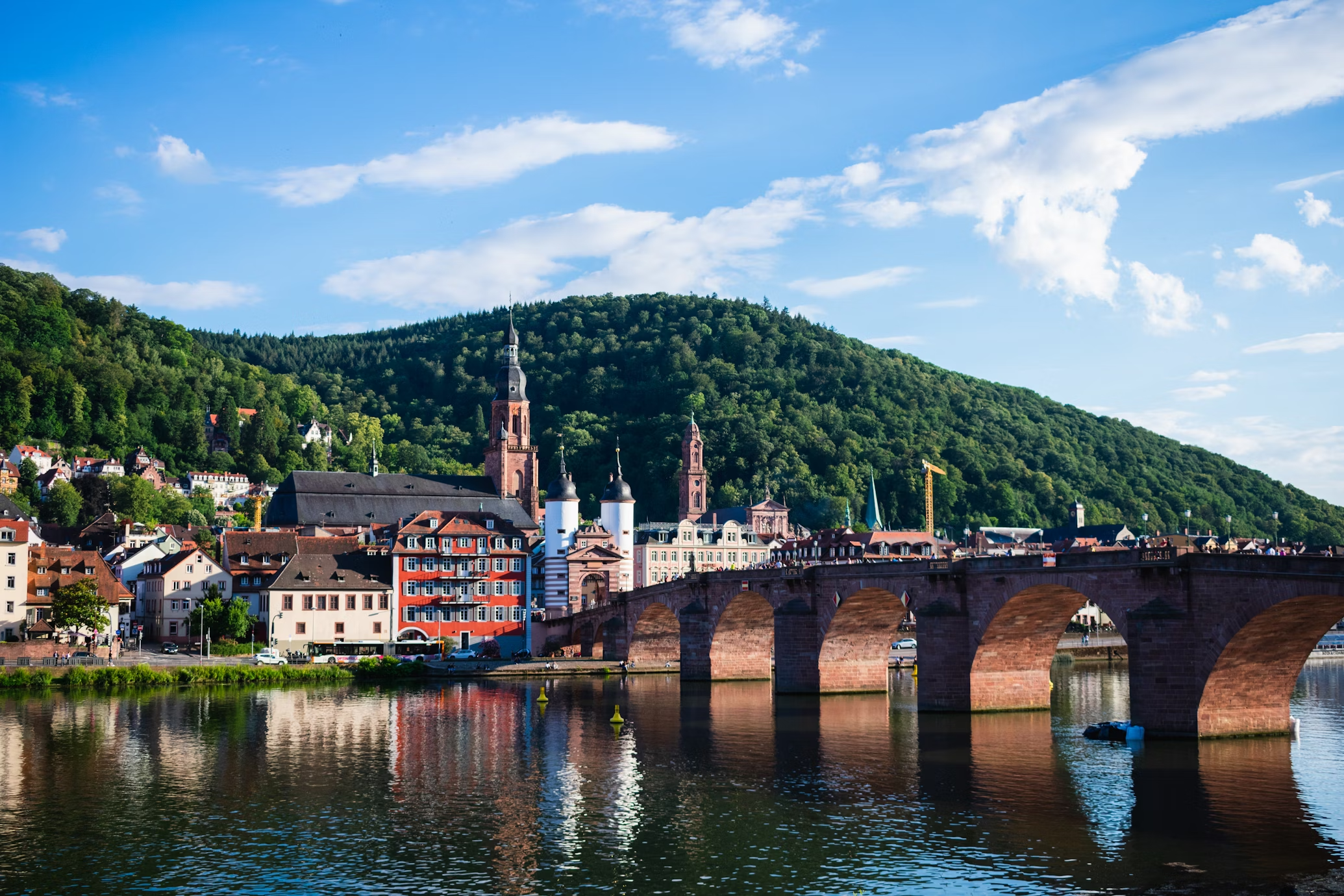
Heidelberg University is Germany’s oldest university and an internationally connected research university with a strong profile in medicine, life sciences, the natural sciences and the humanities.
Its historic campus is complemented by modern research centres and a broad range of international programmes.
World level

World level
Germany